
Jump to main content

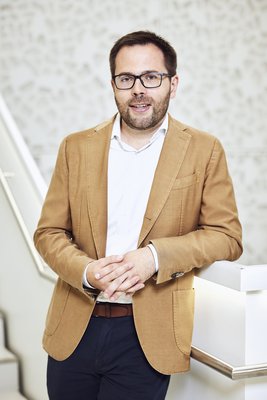
Dr. Arvid Schors

Cologne Center for Advanced Studies in International History and Law (CHL)

Research Coordinator

Contact

Tel.:  0221-470 90204
arvid.schors(at)uni-koeln.de

Albertus-Magnus-Platz
50923 Cologne

Social Media

X/Twitter
https://twitter.com/arvidschors
Bluesky
https://bsky.app/profile/arvidschors.bsky.social

Research Projekt

Soldiers, Occupiers, “Lucky Victims”. German-Speaking Emigrants in the Ranks of the Allies, 1939-1955

This second book project focuses on a highly understudied group of Allied soldiers that played an important role for the transition from war to peace and for post-war order in Germany and Austria since 1944. Ten thousand of these German-speaking emigrants, born since around 1915 in Germany and Austria, had to leave their countries of origin as young men owing to Nazi persecution. Yet later on, they became soldiers in the U.S. and the British military, going through a remarkable process of transition themselves. While they had been stigmatised as outsiders in their countries of origin and had become powerless victims of their exile, the occupation allowed them to return wearing the uniform of the victors. As a result, and in light of their special knowledge and language skills, they acquired influential roles within the occupation. In this brief time span, these “lucky victims” evolved from powerless bystanders of their own fate to influential actors with personal agency. As a distinctive group they exceptionally impersonate and biographically interconnect the two antithetic halves of the 20th century.

Designed as collective biography, the project takes into account both individual experiences and historical effects: On the one hand, regarding the emigrants’ military service questions of mental baggage and abilities as well as expectations and experiences over time occupy center stage. On the other hand, for the period of occupation the attention centers on the concrete actions of the emigrants and their influence on their countries of origin. From an analytical vantage point the emigrants make it also possible to broaden the perspective on the Allied occupation by explicitly integrating transnational dimensions.

Edited Volumes and Publications

"Henry Kissinger. Ordnungsmacht und Deutungshoheit"

Henry Kissinger (1923-2023) is one of the most influential foreign policy figures of the 20th century. He shaped US top diplomacy from 1969 to 1977 as National Security Advisor and Secretary of State. A polarising figure throughout his life, he remains an important point of reference in foreign policy matters even beyond his death. As a professor and distinguished author on international politics, he also exudes the aura of a profound thinker. This volume examines Kissinger as a historical figure to critically analyse the diverse dimensions of his life and work. A focus is also placed on his relationship to Europe and Germany – his country of birth, from which he had to escape in 1938.
With contributions by
Martin Deuerlein | Anna Karla | Barbara Keys | Holger Klitzing | Klaus Larres | Constantin M. März | Arvid Schors | Christopher Seiberlich | Daniel Stahl

"Wie schreibt man Internationale Geschichte?" (Open Access)

What role does international history play in the field of history? What new perspectives can be identified, and what blind spots can be recognized? Drawing on the six key categories of “diplomacy,” “economy,” “law,” “networks,” “family,” and “knowledge,” this volume takes a fresh look at a historical subdiscipline that has recently gained considerable significance. At its core is an exemplary selection of empirically grounded contributions, each of which re-examines the 19th and 20th centuries for international history through the lens of a historical case study. For these two centuries—according to the volume’s central premise—must be understood as a single, interconnected epoch to a far greater extent than before, and research discussions must be more directly linked across the turn of the century.

"Doppelter Boden"

In 1969, the Strategic Arms Limitation Talks (SALT) between the two superpowers, the United States and the USSR, marked the beginning of the first arms control negotiations about nuclear weapons. Contemporaries described the treaty-based outcomes as inadequate and disappointing. Arvid Schors, however, demonstrates for the first time that it was not the formal outcomes, but the negotiations themselves that were decisive. Previously, it was widely considered impossible that negotiations could even take place across the ideological barriers of the Cold War to limit these most destructive weapons systems ever invented. The author analyzes how, after many deadlocks, the experts, diplomats, and top politicians of the superpowers gradually gained trust in one another and learned to understand the other side’s position. He shows how coalitions—and even friendships—formed across the ideological divide, and how the delegations sometimes found themselves in conflict with their own governments and military leaders. While this process could not single-handedly guarantee that a nuclear confrontation would be averted, it did make such an outcome less likely.